
News
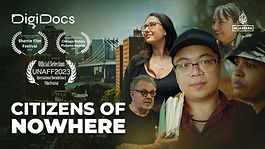
Al Jazeera DigiDocs: Citizens of Nowhere: What It Means to Be Stateless in the U.S.
Al Jazeera DigiDocs
What happens when a person has no country?
Citizens of Nowhere is a documentary short about stateless people in the United States – individuals who, through circumstance or legal technicality, belong to no nation. Without passports, citizenship or legal recognition, they live in a state of uncertainty.
From finding work and accessing education, to simply existing within a system that does not officially recognise them, stateless people face endless bureaucratic barriers.
This documentary short by Alicia Sully questions what citizenship really means, and what happens when a person has none.
A What Took You So Long? production, in association with United Stateless.
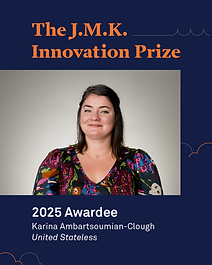
United Stateless Selected for 2025 J.M.K. Innovation Prize
JM Kaplan Innovation Prize
United Stateless redefines social justice by centering the leadership of stateless people themselves, creating a groundbreaking model of self-advocacy and systemic change for a population long excluded from legal recognition and public discourse.

NPR: Living in the Shadows: Why Stateless People Fear Trump's Immigration Crackdown
Jaclyn Diaz
United Stateless was featured in a recent NPR story examining President Trump’s statements on immigration and birthright citizenship. The piece highlights the real-world implications of these policies for stateless people in the U.S. and includes perspectives from those directly impacted

5280: The Woman Who Doesn’t Exist
Spencer Bailey
A powerful story sheds light on what it means to be stateless in the U.S., following the life of an Unregistered American born in Colorado who has lived without legal identity or citizenship. It reveals a hidden reality faced by many who remain unseen and unprotected in the only country they call home.

The Boston Globe: Citizens of Nowhere, Some Undocumented Immigrants have No Home Country to Return To
Huiyee Chiew
United Stateless Staff Attorney Samantha Sitterley shares why we’re leading efforts on the Stateless Protection Act — a bill that would finally create a legal definition and permanent protections for stateless individuals in the U.S. "United Stateless is leading efforts on the Stateless Protection Act- a pathway to end the legal limbo for thousands."

The NY Times: The Chaotic Early Days Inside Florida’s ‘Alligator Alcatraz’ Detention Center
Patricia Mazzei & Hamed Aleaziz
Rick, a United Stateless client and member, bravely shared his story to shed light on poor conditions: 'Everyday here feels like we're being forgotten by the world. We're living in leaking tents with barely any food or water, the lights stay on all night. It's just detention, it's dehumanizing."

Reuters: Pregnant Immigrants Warily Eye US Supreme Court Birthright Citizenship Case
Kristina Cooke
Karina Ambartsoumian-Clough, executive director of United Stateless, a group that advocates for stateless people, said ending birthright citizenship would create "a subset of people with no legal identity." Citizenship laws vary by country and policies often change, countries sometimes dissolve and borders move, Ambartsoumian-Clough said. Not all countries allow for citizenship to be passed on via a parent, Ambartsoumian-Clough added. The more immediate practicalities also are alarming, Ambartsoumian-Clough said. For instance, how would the birth of babies be formally registered and would they be able to access medical care and vaccinations?

The Christian Science Monitor: Birthright citizenship reaches the Supreme Court. What’s at stake?
Henry Gass & Sarah Matusek
According to one analysis, in the absence of federal data, roughly 218,000 U.S. residents were potentially stateless, or at risk of becoming stateless, as of 2017. United Stateless, a human rights advocacy group, says reinterpreting birthright citizenship would create more stateless people. “Most stateless people don’t have any documents. They don’t have any legal identity,” says Samantha Sitterley, staff attorney at United Stateless. If the federal government is going to, overnight, bar automatic U.S. citizenship for a new group of children, she says, “It seems like there has to be some kind of structure in place.”